
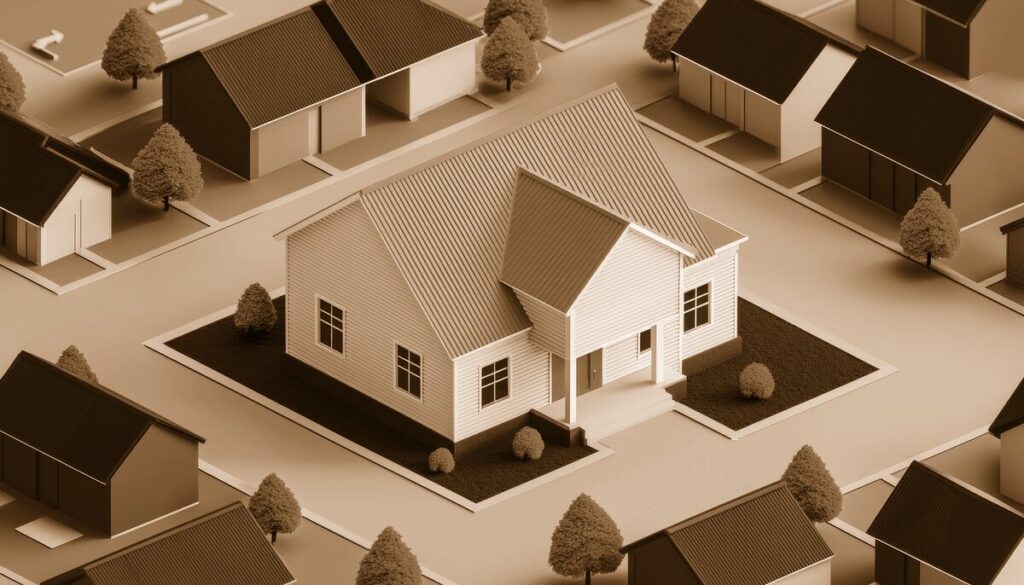
A Neighborhood with a Working-Class Beginning
Glennon Heights has the comfortable, lived-in feeling of a neighborhood that grew from practical needs and lasting relationships. Its story begins in the years after World War II, when Lakewood was changing from a semi-rural landscape of farms, ranches, dairies, and open fields into a collection of growing residential communities.
Unlike many postwar subdivisions created solely by commercial developers, Glennon Heights was organized in large part by federal employees and veterans. In 1947, 94 employees formed Glennon Heights, Inc., with plans for a cooperative housing project near the Denver Federal Center, west of Kipling Street and south of West Alameda Avenue. The group pooled its resources to purchase approximately 160 acres, paying $15,000 for the land. ([ntlrepository.blob.core.windows.net](https://ntlrepository.blob.core.windows.net/lib/41000/41300/41309/DenverWWIISuburbs.pdf?utm_source=openai))
These early residents were closely connected to the Denver Federal Center, which had become an important regional employment center during and after World War II. Others worked for local schools, Jefferson County, or nearby businesses. Glennon Heights offered something especially valuable at the time: an affordable home in a quiet setting, close to work but still surrounded by open country.
How Glennon Heights Got Its Name
The name Glennon Heights came directly from the cooperative organization that created the subdivision: Glennon Heights, Inc. Unlike older Lakewood neighborhoods whose names often reflected farms, landowners, or geographic features, Glennon Heights was named as part of a planned residential development.
The word “Heights” also suited the setting. The neighborhood occupies gently sloping ground west of Kipling, with broad views toward the Front Range in many locations. In its earliest days, the land felt far more open than it does today. Residents remembered pastures nearby, including Sarcasean Ranch, while the surrounding roads were still being improved. Kipling Street, for example, was not paved until 1953. ([ntlrepository.blob.core.windows.net](https://ntlrepository.blob.core.windows.net/lib/41000/41300/41309/DenverWWIISuburbs.pdf?utm_source=openai))
The name became part of the area’s identity quickly. In 1962, when a new Mennonite congregation formed nearby, its members chose the name Glennon Heights Mennonite Church because the church stood within the subdivision. The congregation initially met at local Grange halls before developing its own presence at West Virginia Avenue and South Simms Street. ([gameo.org](https://gameo.org/index.php?title=Glennon_Heights_Mennonite_Church_%28Lakewood%2C_Colorado%2C_USA%29&utm_source=openai))
Building Homes for a New Generation
The first Glennon Heights homes were designed for postwar families: modest, efficient, and adaptable. Protective covenants established minimum home sizes, while the cooperative structure allowed prospective owners to participate in decisions about their lots, floor plans, exterior styles, flooring, and other finishes. Former resident Josephine Waterman recalled that many neighbors were veterans or federal employees, and that the homes were less expensive than those in many competing developments. ([ntlrepository.blob.core.windows.net](https://ntlrepository.blob.core.windows.net/lib/41000/41300/41309/DenverWWIISuburbs.pdf?utm_source=openai))
That practical beginning remains visible in the neighborhood’s architecture. A drive along streets such as West Glennon Drive, South Simms Street, South Nelson Street, and West Virginia Avenue reveals a familiar mix of midcentury ranches, split-level homes, brick houses, and later additions. Many yards are generously sized, reflecting a time when families expected room for gardens, play areas, detached garages, and backyard gatherings.
Lakewood’s planning documents identify Glennon Heights as having the oldest housing stock in the city’s West Lakewood area. A substantial pocket of homes south of Alameda Avenue dates from the 1940s and 1950s, built to house workers connected with both the Denver Ordnance Plant and the Denver Federal Center. ([lakewood.org](https://www.lakewood.org/files/assets/public/planning/sustainability/planning-for-sustainability/lakewood2025movingforwardtogether.pdf?utm_source=openai))
From Open Country to Established Community
During its earliest years, Glennon Heights was distinctly residential. The original development had no parks, schools, or commercial areas, and residents traveled to Denver or Golden for much of their shopping. The surrounding landscape still included fields and ranchland, giving the neighborhood a country atmosphere even as homes filled in.
That isolation did not last. As Lakewood’s population expanded in the 1950s and 1960s, schools, churches, shopping centers, and recreation facilities gradually appeared nearby. The City of Lakewood itself incorporated in 1969, bringing together many established communities that had previously relied on county government and local improvement efforts. Glennon Heights became part of that larger civic story: a neighborhood retaining its own identity while gaining access to citywide services and amenities.
The growth of nearby areas also changed the daily rhythm of the neighborhood. Routes along Kipling Street, Alameda Avenue, and Jewell Avenue became important connections to downtown Denver, the Federal Center, Belmar, and the foothills. What once felt like the edge of town became a central west Lakewood location.
Glennon Heights Park and Pool
For many longtime residents, Glennon Heights Park is the neighborhood’s clearest expression of community life. Located near West Virginia Avenue and South Nelson Street, the park includes an outdoor pool, baby pool, playground, and shelter. ([lakewoodco.gov](https://www.lakewoodco.gov/Local-Government/Departments/Community-Resources/Parks-Forestry-and-Open-Space/A-to-Z-Park-List/Glennon-Heights-Park-and-Pool?utm_source=openai))
The pool is more than a seasonal amenity. It represents the way postwar neighborhoods created shared gathering places for children and families. Summer afternoons at the pool, informal games at the park, and conversations beneath the shelter helped turn a collection of houses into a recognizable community.
The park has continued to evolve along with the neighborhood. Lakewood invested in improvements to the pool, bathhouse, and smaller pool area, preserving the facility while updating it for contemporary use. Neighborhood participation has also played a role in park improvements, including support for a picnic shelter through the city’s Neighborhood Participation Program. ([lakewoodtogether.org](https://www.lakewoodtogether.org/completed-projects?utm_source=openai))
Nearby Sutherland Shire Park adds another layer to the area’s recreational landscape. Named for Lakewood’s sister city in Australia, it reflects the city’s international connections while serving a very local purpose: a place for children to play, neighbors to walk, and families to spend time outdoors.
Schools, Churches, and Everyday Landmarks
Schools have long helped anchor Glennon Heights. Glennon Heights Elementary School, opened in 1957, served generations of neighborhood children and became one of the community’s most familiar institutions. Although school-use decisions have changed over time, the building’s history reflects the rapid growth of postwar Lakewood and the importance of neighborhood schools in creating local identity. ([en.wikipedia.org](https://en.wikipedia.org/wiki/Jefferson_County_Public_Schools_%28Colorado%29?utm_source=openai))
The former Glennon Heights Mennonite Church is another important part of the neighborhood’s heritage. Its origins in 1962 show how local congregations often grew directly from the communities around them. The church’s early members worshiped in borrowed spaces before establishing a permanent home, mirroring the broader pattern of residents building institutions as the neighborhood matured. ([gameo.org](https://gameo.org/index.php?title=Glennon_Heights_Mennonite_Church_%28Lakewood%2C_Colorado%2C_USA%29&utm_source=openai))
The Denver Federal Center, just north of the neighborhood, remains the most significant nearby historical institution. Its presence explains why Glennon Heights developed when it did and why so many original homeowners were federal workers. Today, the Federal Center continues to serve as a major employment and transportation landmark, connecting Glennon Heights to the larger history of west Denver and Jefferson County.
A Neighborhood That Still Feels Personal
Glennon Heights has changed considerably since 1947. Open fields gave way to additional subdivisions, streets were paved, schools and parks were added, and new generations remodeled or replaced some of the original houses. The neighborhood now sits within a busy metropolitan landscape, close to shopping, transit, restaurants, medical services, and regional parks.
Yet its basic character remains remarkably steady. The streets are still primarily residential. Mature trees soften the older ranch homes. The park and pool continue to provide a gathering place. Neighbors still recognize the value of a front porch, a backyard, and a familiar walk to the playground.
That is what makes Glennon Heights special. Its heritage is not centered on one grand mansion or a single monumental building. Instead, it lives in the accumulated story of veterans buying their first homes, federal workers raising families, children meeting at the pool, congregations forming in Grange halls, and neighbors steadily improving the place they shared.
For a neighborhood born from cooperation, Glennon Heights has held on to its founding spirit. Its history is written not only in deeds and plats, but in the everyday warmth of a community that has spent more than seven decades making a home together.